Reading Age Calculator: Is Your Child Behind? (UK Benchmarks by Year + Free Assessment)
Calculate your child's reading age in minutes. UK age-by-age benchmarks for Years 1-6, when to worry vs relax, plus free calculator tool. Learn if your 7, 8, 9, 10-year-old is on track with NGRT standards.
"What's your child's reading age?" It's a question many parents hear at parents' evening — but what does it actually mean? And should you be worried if your child is "behind"?
This guide explains everything you need to know about reading age in the UK, and what to actually do about it.
What is Reading Age?
Reading age measures your child's reading ability compared to the average for children at different ages.
If your 8-year-old has a reading age of 9, they're reading at the level typically expected of a 9-year-old. If their reading age is 7, they're reading at the level of a 7-year-old.
Important: Reading age is just ONE measure. It doesn't capture motivation, enjoyment, creativity, or love of reading — and it doesn't define your child's intelligence or potential.
How is Reading Age Calculated?
UK schools use standardised tests including NGRT (most popular), PIRA, YARC, and the Salford Reading Test. Each measures:
- Comprehension — understanding what's read
- Fluency — speed and accuracy
- Vocabulary — word meaning and usage
The child's score is compared to national benchmarks to produce a reading age in years and months.
UK Reading Age Benchmarks by Year
Use the cards below to find your child's year group and see where they stand.
Once you know your child's reading level, the most effective way to improve it is by giving them reading material that actually matches their ability — not just their school year.
You can create a personalised story at their exact level in under 2 minutes. Their topic, their level — so reading feels achievable instead of like a chore.
No subscriptions — stories stay saved forever.
What Affects Reading Age?
- Reading for pleasure — 15–20 minutes daily makes a significant difference
- Being read to — Exposes children to advanced vocabulary naturally
- Discussion — Talking about books deepens comprehension
- Wide reading — Different genres develop different skills
- Vocabulary exposure — Challenging words met in context stick better
- Limited reading — Not reading regularly stalls progress quickly
- Screen time — Replacing reading time reduces practice
- Lack of books — Limited access to appropriate texts at home
- Only school books — No pleasure reading outside of school
- Undiagnosed difficulties — Dyslexia or vision problems left unchecked
Understanding the Gap
Schools talk about reading gaps in months. Here's what different gaps actually mean:
What If My Child Is Behind?
Many children who start behind catch up with the right support. Reading age is not destiny.
Steps to take:
- Talk to the teacher — ask what specifically is challenging and what support is available at school
- Daily reading at home — even 10 minutes helps; audiobooks count for reluctant readers
- Make it enjoyable — choose topics they love, remove pressure, celebrate effort not just levels
- Consider assessment — if the gap persists, screen for dyslexia, vision problems, or processing difficulties
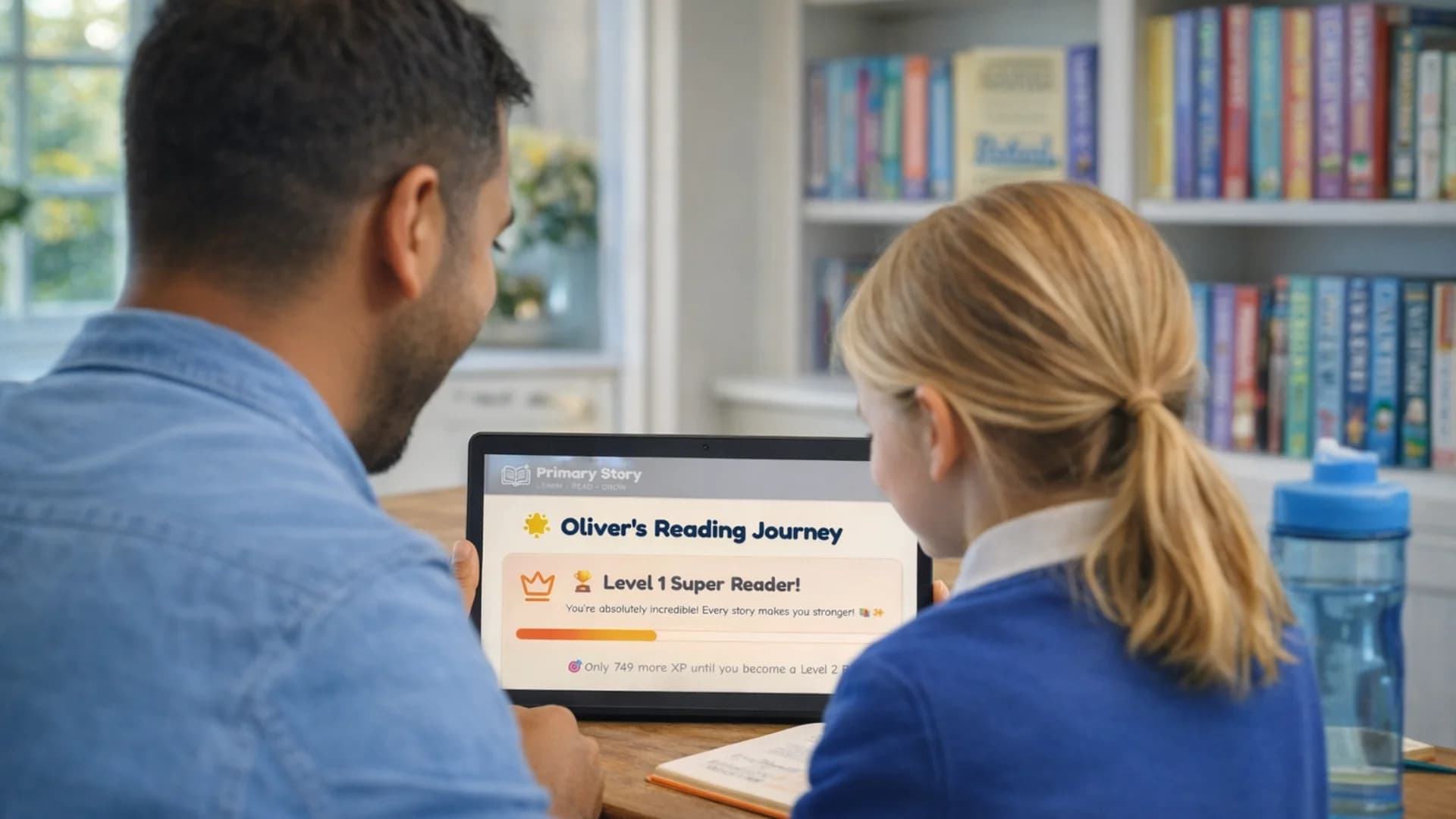
Primary Story creates stories matched to your child's actual reading ability — not their year group. Too hard and they get frustrated. Too easy and they don't progress. Stories at the right level build confidence first, then stretch ability naturally.
What If My Child Is Ahead?
Having a high reading age is wonderful — but remember:
- It's not a competition — every child progresses differently
- Comprehension matters more than decoding speed
- Emotional maturity doesn't match reading age — a reading age of 12 at age 8 doesn't mean 12-year-old content is appropriate
- Balance is important — reading shouldn't crowd out play and other activities
Support advanced readers with more complex non-fiction, different genres, and deeper discussion about themes and characters — not just harder books.
Reading Age and SATs
SATs don't directly measure reading age, but there's a strong correlation:
| Scaled Score | Approximate Reading Age |
|---|---|
| Below 100 | Below chronological age |
| 100 (Expected) | At or near chronological age |
| 110+ (Greater Depth) | 12–18 months above chronological age |
Note: you can have a high reading age but still struggle with SATs if you haven't practised test technique, time management, and specific question types.
5 Myths About Reading Age
How to Estimate Reading Age at Home
While professional tests are most accurate, you can get a rough sense at home:
- Book level method — note the age range on books they read comfortably and average them
- Fluency test — time them reading a 100-word passage aloud and count errors
- Comprehension check — ask 5 questions after reading; 4–5 correct means that level is comfortable
📊 What To Do Now You Know Their Reading Age
Whether they're behind, on track, or ahead — the next step is the same: practice with stories at the right level.
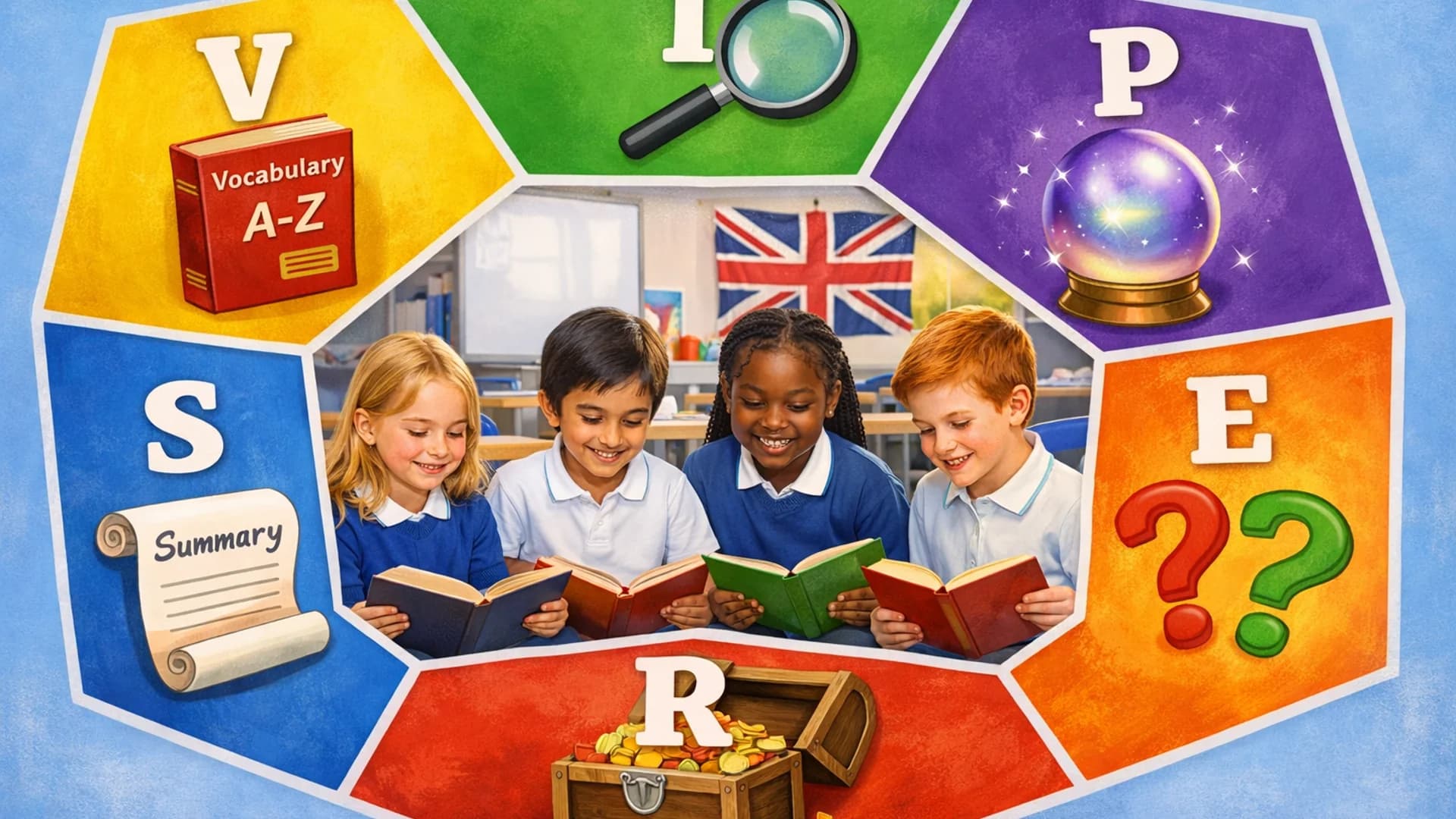
Your child picks a topic they love. Primary Story creates a personalised story matched to their year group and reading ability, with VIPERS comprehension questions built in. Behind? Build confidence at a comfortable level. On track? Keep them engaged. Ahead? Challenge them with more complex vocabulary.
Now You Know Their Reading Age — What Next?
- My child can read but refuses to → Help for Reluctant Readers — practical strategies to rebuild motivation without the battles.
- I want stories matched to their level → Personalised Stories for Kids — they pick the topic, we match the difficulty.
- They need more confidence before they'll read willingly → Building Reading Confidence — small wins that add up.
- I want to make reading feel less like homework → Make Reading Fun — turn reading from a chore into something they choose.
The reading age number matters less than what you do with it. The goal isn't a higher score — it's a child who wants to read.
See your child reading at the right level
Create a personalised story matched to their ability — and watch them engage with text that's just right.
See your child reading at the right level
Create a free personalised story matched to their reading level and interests.
Create a Free StoryFree account • No payment required